In English | ISSUE 4/2025
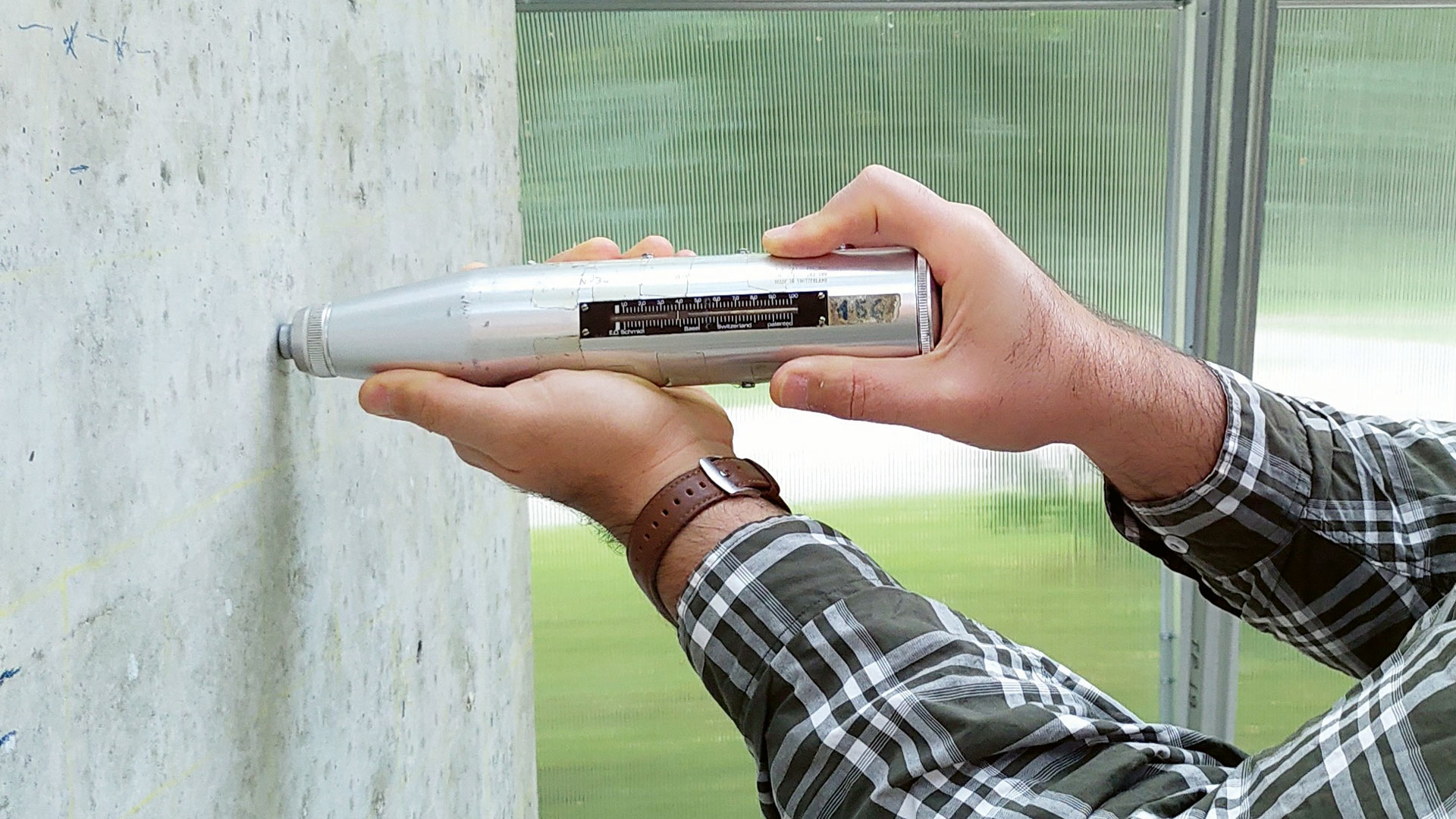
A new European standard (EN 13791) and its national application standard in Finland (SFS 7508) for assessment of in-situ compressive strength were published in 2019 and 2021 respectively. However, it was noticed that the new standards significantly underestimated compressive strength when the rebound hammer testing was used. This led to unnecessary testing of compressive strength with drilled core. In the standards, the correlation between rebound hammer and compressive strength was based on large number of tests carried out through the years in Germany and the correlation is not very representative for Finnish concretes.
In Finland a national correlation between rebound number and compressive strength was determined. A project was established at Aalto-University. The concrete producers delivered 150 mm test cubes to Aalto University, which performed the rebound hammer testing, UPV measurement and finally the compressive strength was measured. The tests were made for both R- and Q-type rebound hammers. In total, 120 cubes were tested. Also, a round robin test was organised in which different testing units were testing the same concrete structures and the variation between the testing units was determined.
Based on the above-mentioned test series new tables for the standards SFS 7508 were determined to estimate the compressive strength class of concrete. In Finland, the compressive strength measured from structure needs to fulfil 85 % of the nominal strength level. This is included in the updated version of the standard, published in 2024.