


In English | ISSUE 2/2026
Innovative low-carbon recycled aggregate concrete
Rudus Oy’s project has produced new research knowledge on low-carbon raw materials and methods for concrete construction, while developing practical applications to support their use in the construction industry. The aim is to increase know-how and promote low-carbon concrete construction more widely in Finland and globally.
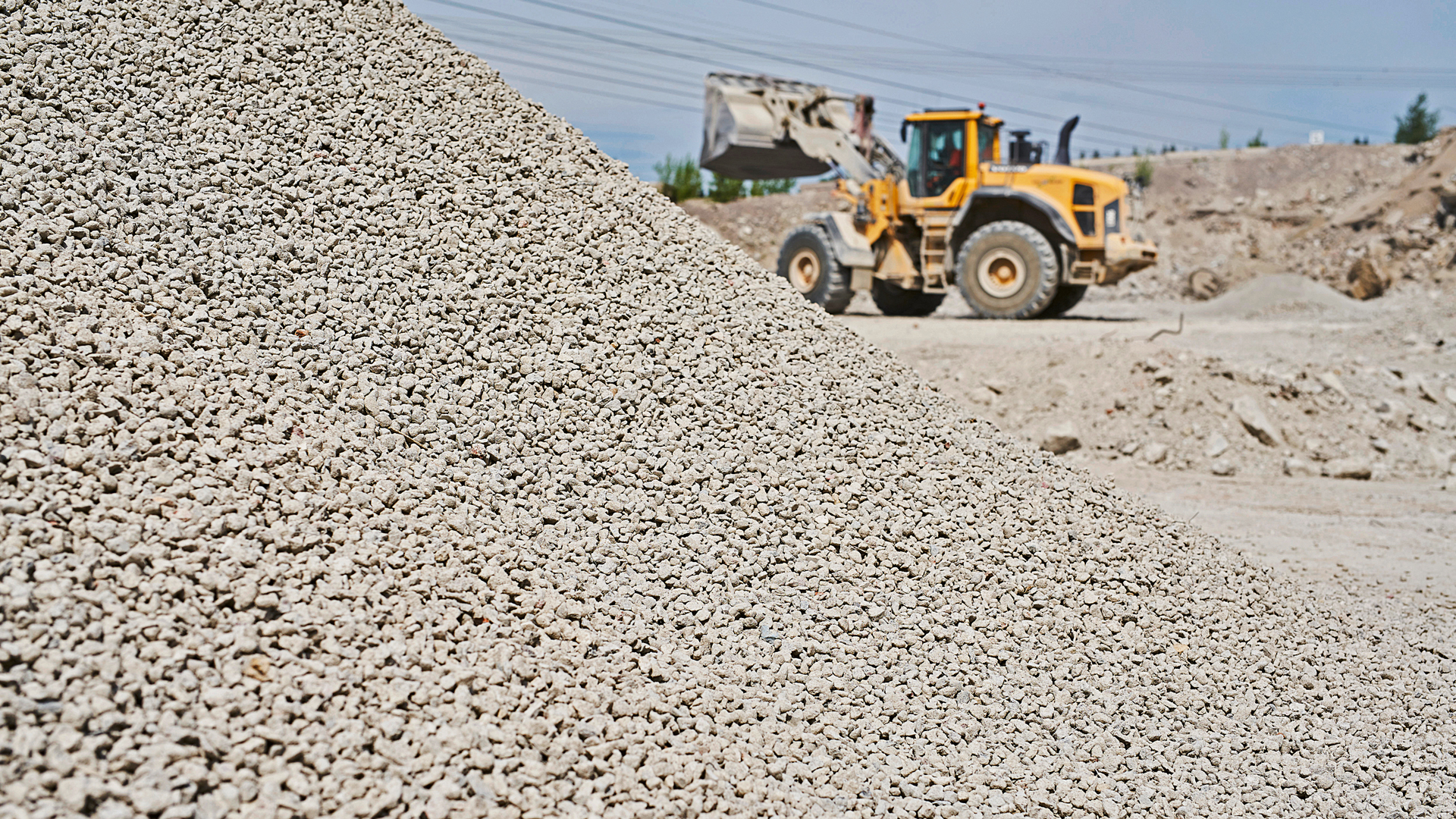
The study investigated recycled aggregate sourced from crushed concrete collected from demolition sites and processed on Rudus premises. The 2022 End-of-Waste Status classification streamlined practices by enabling recycled aggregates to be used similarly to natural aggregates, eliminating previous waste-related approval procedures. Based on the findings, recycled aggregates demonstrate significant potential as a viable alternative to virgin aggregates, with concrete workability, structural strength development, and ultimate performance optimizable for a wide range of applications.
The aggregate data complements previous research on low-carbon binders and processes, enabling a more holistic approach to identifying low-carbon potential across all construction areas. While standardization’s strict quality requirements have somewhat slowed adoption of recycled materials in novel concretes, ensuring these standards do not hinder sustainable development is critical.
The findings indicate that concrete made with recycled aggregates exhibit sufficient properties within their designated exposure classes. The use of recycled aggregates does not significantly compromise elastic properties, and longterm deformation can be effectively managed. However, broader adoption requires extended monitoring tests and durability simulations, particularly concerning freeze-thaw resistance.
The experiments could inform the development of a national aggregate standard in Finland, producing concrete with optimal lifecycle durability while advancing circular economy principles. This is best achieved by utilizing only tested and approved aggregates and generating research data that clarifies both the limitations and opportunities of recycled aggregates.
The project’s results demonstrate that recycled aggregates in low-carbon concrete construction offer a promising alternative, contributing significantly to the construction industry’s transition toward sustainable solutions. Political demand and increasing legislative requirements create favorable conditions for technological advancement, though further research is needed to expand practical applications.
This research was partially funded by the European Union’s Recovery and Resilience Facility (RRF), coordinated by the Ministry of the Environment.